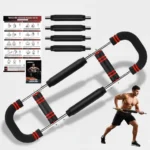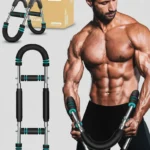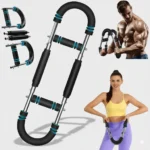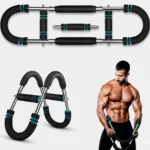

The Twister Arm Trainer has become a favorite tool for people who want to build upper body strength at home without heavy gym equipment. Compact, affordable, and easy to use, it targets your chest, arms, shoulders, and back muscles through resistance-based exercises.
But like any fitness equipment, the Twister Arm Trainer must be used correctly to avoid strain or injury. In this guide, you’ll learn how to use a Twister Arm Trainer safely, step by step, so you can maximize results while keeping your workouts safe.
What Is a Twister Arm Trainer?
A Twister Arm Trainer is a portable resistance device made of two handles connected by a spring mechanism. When you press or pull against the spring, your muscles contract, creating resistance.
Benefits of Using a Twister Arm Trainer:
- Strengthens chest, triceps, biceps, shoulders, and back
- Improves muscle endurance
- Portable and easy to carry anywhere
- Affordable alternative to dumbbells or machines
- Suitable for home workouts and travel
💡 It’s especially popular among beginners and busy professionals who want to stay fit at home.
Safety Tips Before You Begin
Before starting, it’s important to prepare:
- Check Your Equipment – Make sure the spring isn’t loose or damaged.
- Warm Up Properly – Spend 5–10 minutes doing light stretches and mobility exercises.
- Start with Light Resistance – Don’t push too hard in your first sessions.
- Maintain Good Posture – Stand tall, core engaged, shoulders relaxed.
- Breathe Correctly – Inhale while returning to starting position, exhale during exertion.
Step-by-Step Guide: How to Use a Twister Arm Trainer Safely
Step 1: Grip the Handles Correctly
- Hold the trainer firmly with both hands.
- Keep your wrists straight (avoid bending).
- Position your elbows slightly bent—not locked.
Why it matters: This prevents wrist and elbow strain.
Step 2: Set Your Stance
- Stand with feet shoulder-width apart.
- Slightly bend your knees for balance.
- Engage your core muscles to protect your spine.
This stance ensures stability and reduces injury risk.
Step 3: Perform the Chest Press Motion
- Hold the Twister Arm Trainer at chest level.
- Slowly press the handles inward.
- Pause for 1–2 seconds at maximum tension.
- Return slowly to the starting position.
✅ Target Muscles: Chest, triceps, shoulders.
Step 4: Perform the Overhead Press
- Hold the trainer above your head.
- Press inward, engaging your shoulders and upper chest.
- Slowly release back to the starting point.
Target Muscles: Deltoids, upper chest, arms.
Step 5: Perform the Front Press (Straight Arm Extension)
- Extend your arms straight in front of you.
- Press inward against resistance.
- Slowly release while keeping arms controlled.
Target Muscles: Chest, forearms, and stabilizers.
Step 6: Perform the Back Pull (Reverse Motion)
- Hold the trainer behind your back.
- Push outward to engage the upper back and shoulders.
- Control the motion when returning.
Target Muscles: Lats, rear delts, traps.
Common Mistakes to Avoid
- ❌ Using Too Much Resistance Too Soon → Can cause strain or injury.
- ❌ Locking Your Elbows → Adds stress on joints.
- ❌ Poor Posture → Leaning forward or arching your back can cause pain.
- ❌ Fast, Jerky Movements → Always use slow, controlled motions.
- ❌ Skipping Warm-Up → Increases risk of injury.
Related Topic: How to Adjust Saker Twister Arm Trainer: Complete Guide for Beginners & Fitness Enthusiasts
Beginner-Friendly Twister Arm Trainer Routine
Here’s a simple 3-day beginner workout plan:
Day 1 – Chest & Arms
- Chest Press: 3 sets of 10 reps
- Front Press: 3 sets of 12 reps
- Bicep Press Hold: 2 sets of 20 seconds
Day 2 – Shoulders & Back
- Overhead Press: 3 sets of 10 reps
- Back Pull: 3 sets of 12 reps
- Lateral Press Hold: 2 sets of 15 seconds
Day 3 – Full Body Conditioning
- Chest Press: 3 sets of 12 reps
- Overhead Press: 3 sets of 10 reps
- Back Pull: 3 sets of 10 reps
- Core Engagement (hold trainer at chest, twist slowly side-to-side): 2 sets of 15 twists
Who Should Use a Twister Arm Trainer?
The Twister Arm Trainer is ideal for:
- Beginners starting resistance training
- Home workout enthusiasts with limited space
- Office workers needing quick fitness breaks
- Travelers who want portable exercise tools
People with shoulder, elbow, or wrist injuries should consult a doctor before use.
Twister Arm Trainer vs. Other Resistance Tools
- Twister Arm Trainer vs. Chest Expander:
- Twister = push-based, easier for beginners
- Chest Expander = pull-based, more versatile
- Twister Arm Trainer vs. Resistance Bands:
- Twister = fixed resistance, limited progression
- Bands = variable resistance, more flexibility
- Twister Arm Trainer vs. Dumbbells:
- Twister = portable, cheaper
- Dumbbells = more strength progression, but bulky
FAQs About Using a Twister Arm Trainer
Q1: Can I build muscle with a Twister Arm Trainer?
Yes, but it’s better for toning and endurance. For bulk, combine with weights or a chest expander.
Q2: How many times per week should I use it?
3–4 sessions per week, 20–30 minutes each, is ideal.
Q3: Is it safe for beginners?
Yes, if you start slow and maintain proper form.
Q4: Can I use it for weight loss?
Yes. Combined with cardio and a healthy diet, it helps burn calories and tone muscles.
Final Verdict
The Twister Arm Trainer is a powerful, portable tool for building upper body strength safely—especially for beginners. By following the step-by-step guide above, keeping good posture, and avoiding common mistakes, you can make the most of this compact fitness device.
👉 Pro Tip: Pair your Twister Arm Trainer with a Chest Expander or resistance bands for a complete home workout routine.